
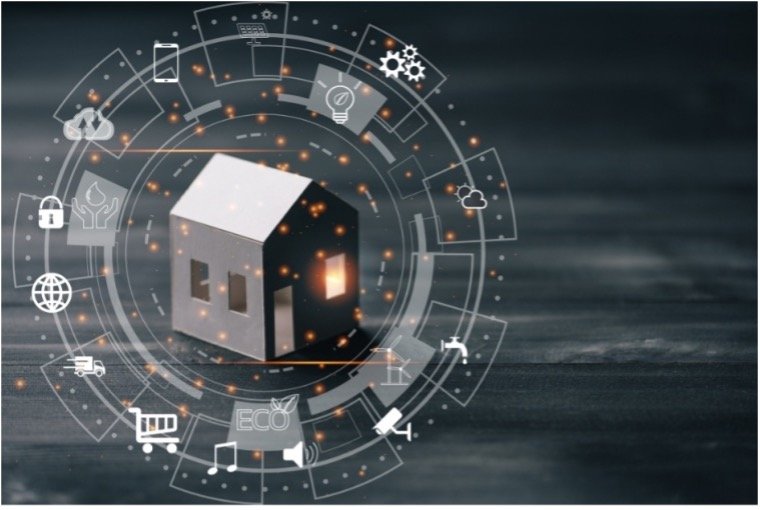
Smart Home Chapter: How to make my home smart? How to install automations & how much does a smart home cost? Find out information about everything you need!
A smart home represents a modern lifestyle, with the demand for buying or building houses with smart features showing a significant increase. It is indisputable that a smart home can make your everyday life easier, making your life more comfortable. Who wouldn’t want to have full control of their home through a device they can hold in their hands almost all the time?
Smart homes have advanced systems that impress, using the latest technologies to automate various processes inside and outside your home. Are you looking for information to install automations that will make your home smart? Below you will find everything you need.
What is smart home
By the term “smart” house we mean a property that incorporates – to a lesser or greater extent – the possibility of regulating and controlling certain electromechanical installations. In particular, a smart home, a house with some intelligence, so to speak, “works” functions according to your own needs, giving you total control. These functions are controlled at the push of a button, remotely, whether you are inside or away from the building.
The smart home does not identify with simple programmable timers. On the contrary, it is a truly automated house characterized by the ability to create complex lighting conditions, sophisticated security control, image and sound distribution, and energy management.
Smart Home and Automation Installation
Are you thinking of investing in the installation of systems that will make your home smart? It all starts with the appropriate study of the space by professionals. From this study, your needs will emerge and after you have obtained all the necessary information about the smart home, you will be able to create a plan for the complete installation.
It should be noted that the installation of automations can have to do with the creation of a smart home as a whole, or the integration of individual smart functions, according to your needs, wants and of course, your budget.
Then, after a comprehensive-documented study and discussion with the company or the person who will undertake any improvements, you can make the relevant agreements, gradually proceeding to transform your home into a smart one. In a home that can provide you with conveniences and automations, making your life more comfortable and functional, without effort.
How to make my home smart – the top automations for a smart home
Is the question “how can I make my house smart” tangle in your mind? If so, then it is important to know that there are dozens of smart home automations that can make your life more comfortable, with the most popular being the following. Specifically:
#1 Home Security Automations
Home security automations include a variety of technological solutions designed to protect the home and its residents from dangers and threats. These automations can include:
· Alarm system: motion sensors, window and door sensors, as well as surveillance cameras that trigger an alarm when they detect open doors, windows or even indoor traffic.
· Access control: systems that allow home access by using codes, access cards or even biometrics, such as fingerprints.
· Smart locks: Electronic locks that can be controlled from remote locations via smartphone or tablet.
· Security cameras: Smart surveillance cameras that allow home tracking from any place with internet access.
· Notifications: Systems that alert residents via SMS, email or smartphone notifications in case of a problem.
· Fire detection: Sensors that detect the presence of smoke and trigger an alarm to warn residents – and/or fire brigades in case of danger.
#2 lighting automations
A system for smart lighting can turn on, turn off and automatically increase the brightness inside your home, depending on your needs, the available natural light, saving energy and offering optimal visibility. Smart lighting facilitates your everyday life at home as a whole and gives you whatever atmosphere you want, depending on the occasion.
#3 Automation of water heater, watering system & electrical appliances
The system can turn on and off a host of electrical devices at the touch of a switch, even remotely via smartphone. In particular, it may include the following:
· Water heater automation: Water heater temperature programming according to your needs and remote control via smartphone or tablet.
· Watering system automation: watering programming and soil sensors for automatic moisture and need for watering control.
· Automation of electrical appliances: Remote control of electrical appliances, such as air conditioners, ovens, televisions, etc., and the ability to program their operating hours to save energy.
#4 Audio and video automation
Easily and quickly set up audio and video players inside your home, filling the space with your favorite melodies or your beloved programs. Check at any time and moment whether or not you turned off the radio and/or the TV leaving the house.
Automatic switches are the core of the system. In particular, they distribute all the information and accept programming through a local network connection to create various scripts at home.
#5 Automation of shading rolls and awnings
Roller blinds and shading awnings are the use of technologies to automate the shading system in a home. In particular, such a system raises and lowers the rolls and awnings individually or in groups at the push of a switch. Shading at the appropriate times leads to reduced temperatures inside the house and therefore a reduction in the needs for cooling. Some features are as follows:
・Automatic opening and closing
・Brightness sensors
Wind sensors
· Remote control
· Presence simulation
· Voice command control
#6 Heating and cooling automation
The system can adjust heating and cooling remotely, not just as an on/off function, but by taking on all the adjustment functions that the air conditioner remote can perform. You can plan, in advance, the temperature change at home depending on the season or simply the time of day, with a touch or a simple voice command.
What are the benefits of a smart home?
Your smart home provides full information and control even when you are on the other side of the world. With the installation e.g. security cameras and their connection to your mobile phone or computer, you have remote access to your home 24/7. You know at all times who is entering or leaving, offering security and peace of mind. Beyond safety, the smart home is a smart investment that can reward you in the long run. Specifically, a smart home:
#1 Increases the purchase value of the property
According to research, the automation of certain processes in a home can increase the value of 5% – 35%, depending on the number and type of smart devices to be used. More and more real estate buyers are interested in buying a house that has smart devices, including:
smart thermostat,
fire sensor,
smart lighting system,
smart camera,
· Entire network of automated systems.
#2 Reduces daily stress
Considering the increased levels of crime, property owners choose to frame their homes with the best possible safety measures. Thus, Smart Homes, which already have such smart security systems (e.g. monitoring system) installed, are particularly attractive, as they offer the required sense of security and calm.
#3 Makes life more comfortable and easy
All of us, more or less, want everything and want it now. For this reason, it is not surprising that almost everything can now be done with a few taps on our mobile phone. Do you want to order? You use the corresponding app. Do you want to manage your finances? The same. Do you want to reserve a table at a restaurant? Similarly. Well, the smart home puts the control and management of many home functions in your mobile phone. Thus, it makes your life easier.
#4 Contributes to the protection of the environment
Often, a smart home is identified with the “green house” due to its high energy efficiency and autonomy that reduces or even limits the consumption of electricity and fossil fuels. So we would say that, in a way, a smart house is more ecological and environmentally friendly than a conventional property, since it contributes to the protection of the environment and the preservation of energy sources.
#5 helps significantly in saving money
Installing a smart home is an expensive investment, but in the long term it offers payback, but also savings in the second year. As long as everything is checked with a few clicks, you can always be sure of what works, how it works and for how long in your home. You have control over the various devices in his home, you also control how much they “burn”, since you define their overall function, limiting the reckless waste of energy from devices that are constantly activated, even when no one is in the room to use them.
Smart home and cost
It makes sense to have second thoughts when it comes to the smart home, since the cost of installing automations is not negligible. However, if you consider the benefits it can offer you in the second year, then it is worth thinking again. Especially in a possible renovation, it would be good to consider the possibility of a “smart home”.
The cost of turning a house into a smart home has to do with what you want to install inside it. For example, an installation that requires a lot of wiring will obviously cost much more than buying wireless devices that communicate with each other. For example, if you start with a smart hub, the base on which you set up your smart home, since it acts as the means of communication and tuning of various smart devices (ecosystem), you can spend from 12 euros to 300+ euros, depending on your needs and budget.
If your property is at the stage of studying the electromechanical installations, then we recommend that you be informed by a responsible engineer about the smart home systems (smart home) and how they could be integrated depending on the study.
As far as existing residences are concerned, the correct solution comes after a serious study, which will document the proposed changes in wiring and installation. The correct evaluation of the benefits and the payback time of the project are the “key” to making the final decision.